
Thesis
Food and agriculture is one of the few global systems where inefficiency remains a structural feature.
Significant value is trapped in mismatched supply and demand, wasteful energy and logistics, high-friction compliance and under-optimised production. Inefficiencies in food systems are multiplicative rather than additive, which means small improvements unlock disproportionate value and the right infrastructure can capture it.
What changes now is that the convergence of biology, energy, data and finance finally gives us the tools to address these inefficiencies at scale. As silos collapse, new infrastructure layers can orchestrate production, capital, energy and quality in ways today's food system cannot.
Each pillar of our thesis targets a different class of inefficiency: informational, physical and biological.
Pillar 01
Data Systems
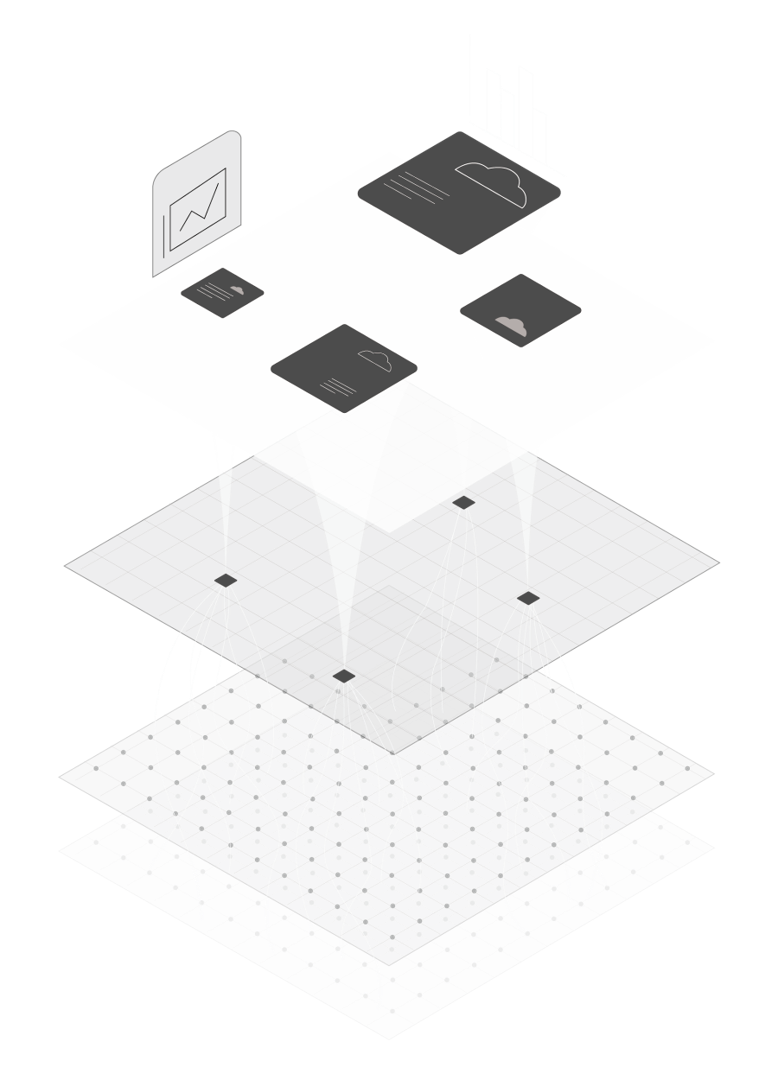
The informational layer. Converting fragmented information into liquidity, trust and incentives.
AI is only as powerful as the data it trains on, and food remains one of the last major industries where that data sits trapped in siloed, analogue systems. Unlocking it compounds: better data produces better models and better decisions, which produce better data again. The EU's rollout of a Common European Agricultural Data Space is forcing the issue, creating immediate demand for shared standards and quality rails that connect farm data to pricing and premiums. The fragmentation runs well past the farm gate. A lack of interoperability between ingredient suppliers and manufacturers drives inventory waste and blocks real-time reformulation against supply volatility, and in food service the disconnect between front-of-house demand and back-of-house procurement is a persistent source of margin erosion. We back the companies converting that fragmentation into liquidity, trust and incentives.
Portfolio
Messium · Peckish · Alphabiome · Soilytix
Pillar 02
Distributed Infrastructure
The physical layer. Replacing fragile linear supply chains with resilient, localised systems.
As energy costs rise and regulation tightens, moving energy production, waste processing and cold storage closer to the source is shifting from optimisation to a condition of survival. Decentralised systems are emerging so the food supply holds through energy spikes and climate shocks. Replacing fragile linear supply chains with distributed nodes improves resilience while capturing value from resources previously written off as waste, including infrastructure-in-a-box that lets businesses process ingredients or manage waste on site, decoupling growth from grid volatility and labour shortage. We back the companies building that localised, shock-resilient layer.
Portfolio
Pillar 03
Bioengineering & Precision Manufacturing
The production layer. Redefining high-value production with predictable quality and cost.
Bioengineering and precision manufacturing are converging to industrialise bio-based solutions across the food value chain, from upstream inputs through to retail products. This is moving high-value production out of unpredictable open-field environments and into controlled manufacturing systems, stabilising both quality and cost while opening profit pools that span agrifood, wellness and pharma. This is the production engine of the next-generation food system, the layer that lets founders create superior products meeting the demands of regulators and consumers at once. We back the companies redefining how high-value inputs, ingredients and materials get made.
Portfolio